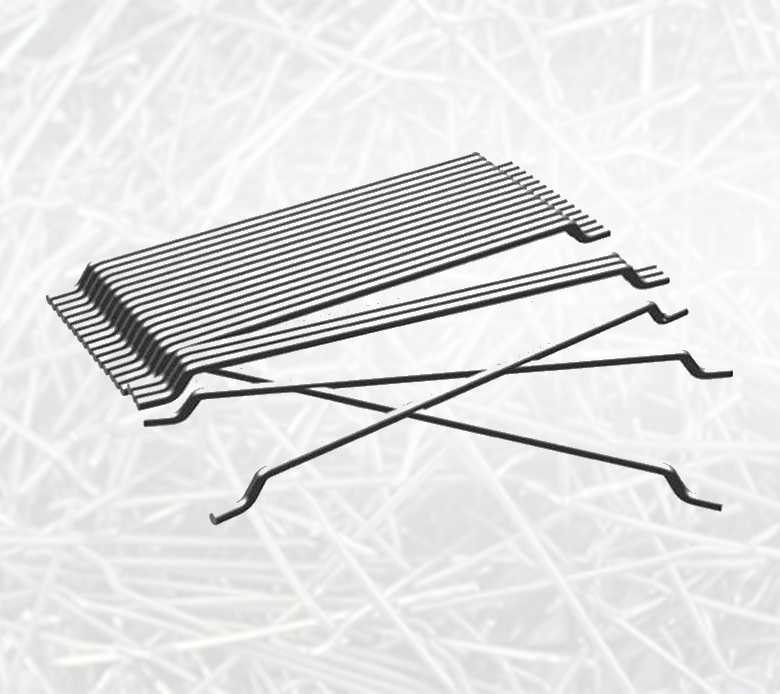
What are the advantages of Stainless Steel Fibre?
As we know that concrete is one of the widely used construction materials across the world. However, many properties make this renowned structural material vulnerable to cracking. The studies indicate that there are varied reasons for cracking, and one of the predominant reasons amongst them is the weakness against tensile strength. Here comes the use of Stainless Steel Fibre. When Stainless Steel Fibre is incorporated in cement, it significantly enhances combined properties that include strength, toughness, energy absorption, durability, corrosion resistance, water tightness, appearance, and constructability.
Stainless Steel Fibre as a reinforcement material
Steel fibre is commonly used in the refractory business to reinforce intense temperature concretes. It is known to sustain the refractory strength in high-temperature gradients. Using steel-fibre technology in refractory applications offers broadened benefits like excellent abrasion resistance, exceptional resistance to spalling, remarkable fracture toughness, superior resistance to mechanical and thermal shock along with consistent alloying features.
Better Strength, enriched Durability
As mentioned above, Stainless Steel Fibre reinforces concrete by resisting tensile cracking, fragmentation, and fatigue. The studies show that spacing plays a vital role in strengthening mechanisms. The closeness of fibre and the bond between fibre and cement decides the quality and can endure tensile load as well as durability.
High Thermal Cycling
High Thermal Cycling — or thermal conductivity — is another promising advantage of Stainless Steel Fibre. When Stainless Steel Fibre blends with the matrix, it has a magical effect: it can offer high conductivity levels along with excellent temperature resistance for demanding thermal applications. Ferritic stainless steel fibres are resistant to corrosion and scaling at elevated temperatures, and precipitation-hardening (PH) stainless steel fibres develop high strength and hardness through heat treatment. Another prominent feature is continuous fibre soaking temperature up to 1100°C.
Corrosion Resistance
Another remarkable benefit of Stainless Steel Fibre is its high corrosion resistance. The studies reveal that the presence of chromium, nickel, carbon, and additional elements such as copper, columbium, aluminium, and molybdenum is embedded in it. When Stainless Steel Fibre comes in contact with oxygen, a protective chromium-oxide layer forms on its surface that acts as a passive film making the steel corrosion-resistant.
Alleviate Chemical Corrosion in Concrete
The Stainless Steel Fibre also possesses the capacity to resist chemical corrosion in concrete. Concrete is one of the inevitable materials used in industrial applications and is exposed to harmful atmospheres, making it vulnerable to chemical corrosion, and this will be a hindrance to construction works. Research has shown that when Stainless Steel Fibre is incorporated in cement, it works effectively in preventing corrosion due to chemical reactions.
High Compressive Strength
Many studies indicate that the compressive strength of Stainless Steel Fibre-incorporated cement is quite high — it can reduce spalling and explosive failures due to high fire resistance. The reinforcement provided by fibres can work at both a micro and a macro level: at a micro-level, fibres arrest the development of microcracks leading to higher compressive strengths, while at a macro level, fibres control crack opening and increase the energy absorption capacity of the composite.
Easy Handling
Another remarkable quality of Stainless Steel Fibre is its dispersion — which allows its use in industrial applications such as prefabricated segmental linings for tunnels. Apart from this, Stainless Steel Fibre is economical and affordable for industrial applications.